Distance alone is an incomplete answer
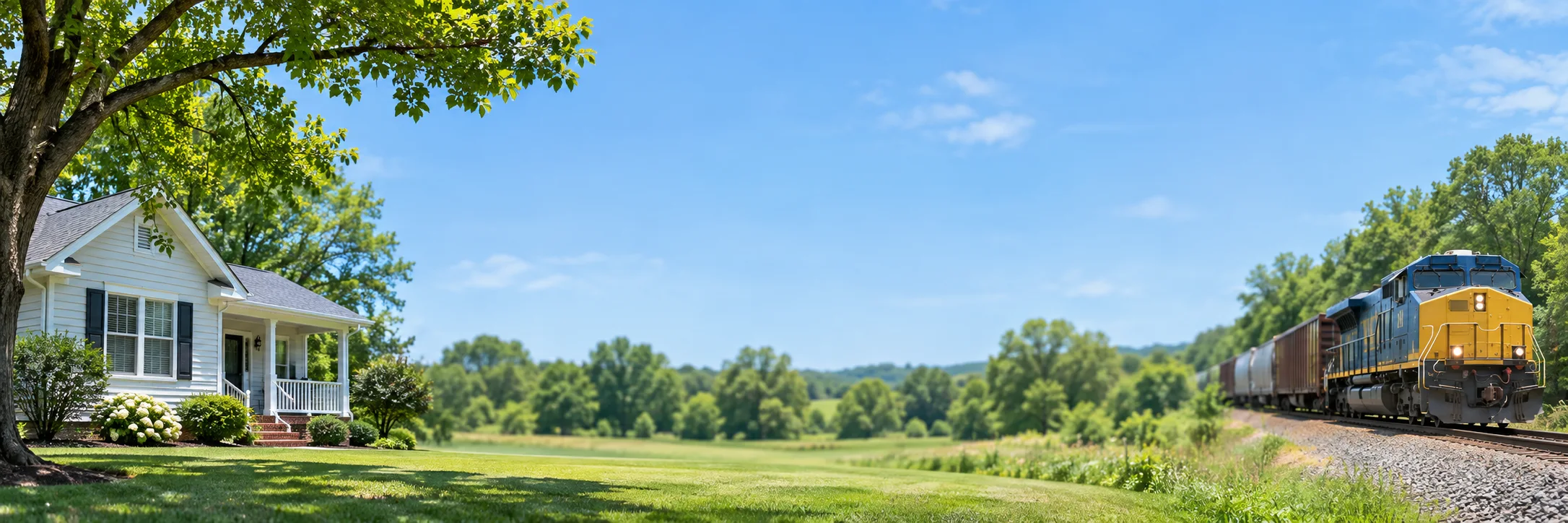
A house 500 feet from lightly used tracks may be experienced differently from a house half a mile from a busy crossing where horns sound regularly. Train frequency, nighttime activity, speed and crossing location should be considered with distance.
Check the nearest public crossing
Public crossings are especially relevant to horn exposure. Determine whether the nearest reported crossing has a quiet-zone designation and how far it is from the property.
Look at day and night separately
Reported nighttime movements are important for buyers who are sensitive to interrupted sleep. Treat FRA counts as inventory estimates rather than exact schedules, and note the year of the reported count.
Use the house itself as the final test
Topography, walls, insulation, windows and bedroom orientation affect sound and vibration. Visit the property during operating hours that matter to you and ask nearby residents about their actual experience.
Bottom line: “Too close” is a property-specific decision. Use federal records to identify the questions, then verify them on site.
Check the rail corridor near a U.S. address
See the nearest reported crossing and available FRA operating fields.
Sources and reporting limits
Consult the FRA crossing inventory resources and FRA horn and quiet-zone guidance. Read our source coverage and limitations alongside the report.