NEAREST MAPPED RAIL LINE
Loading…
Looking up mapped rail lines
Railroads, road traffic, transportation noise and flood maps. Know what to check before your next viewing.
Choose a candidate, enter a full U.S. address, or position a pin on the map.
Illustrative AI-generated landscape · not a photo of the searched property
Start with the questions that matter, then check the address behind the listing.
Separate building condition, location records and the questions that need a professional answer.
What to check before buying →Investigate the actual block, your daily routes and the gaps in available public records.
How to research a neighborhood →Take specific questions, request documents and leave with a clear plan for follow-up.
Open house questions and checklist →Federal crossing records for 300 U.S. cities and suburbs, mapped. Orange dots report night trains.
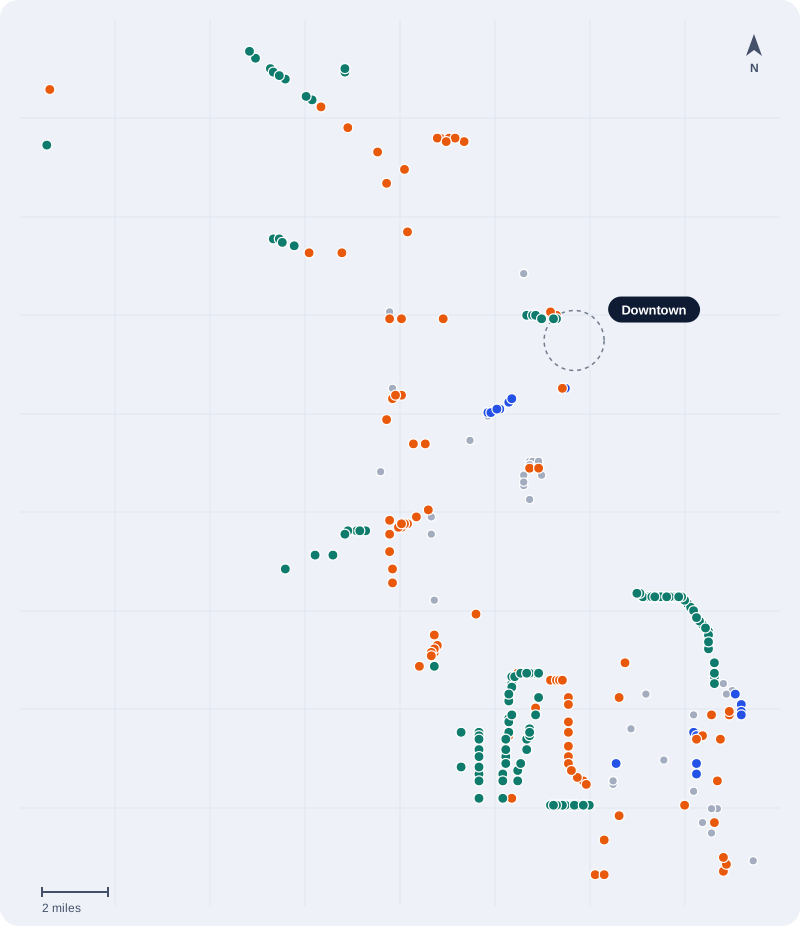
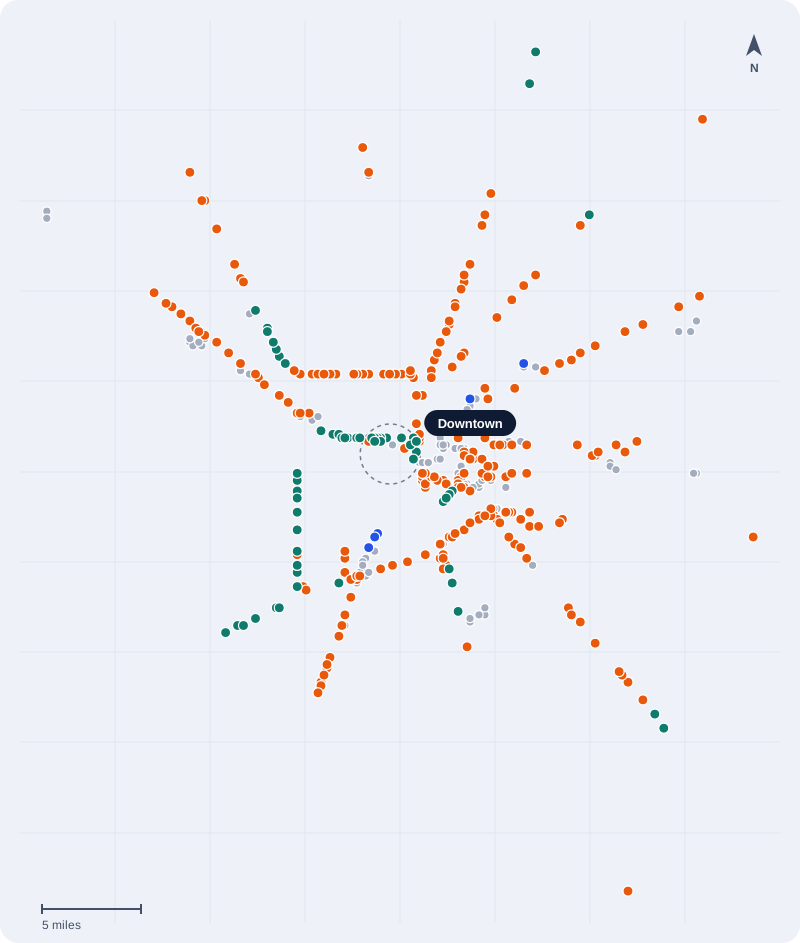
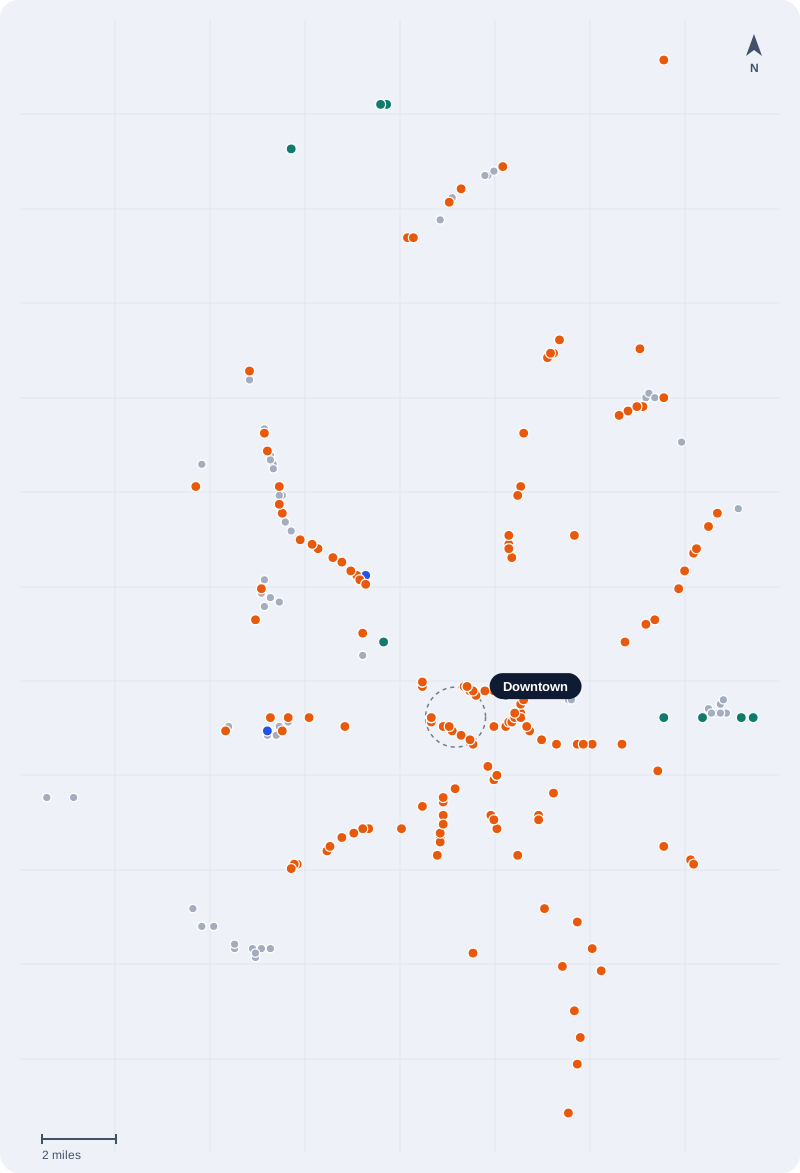
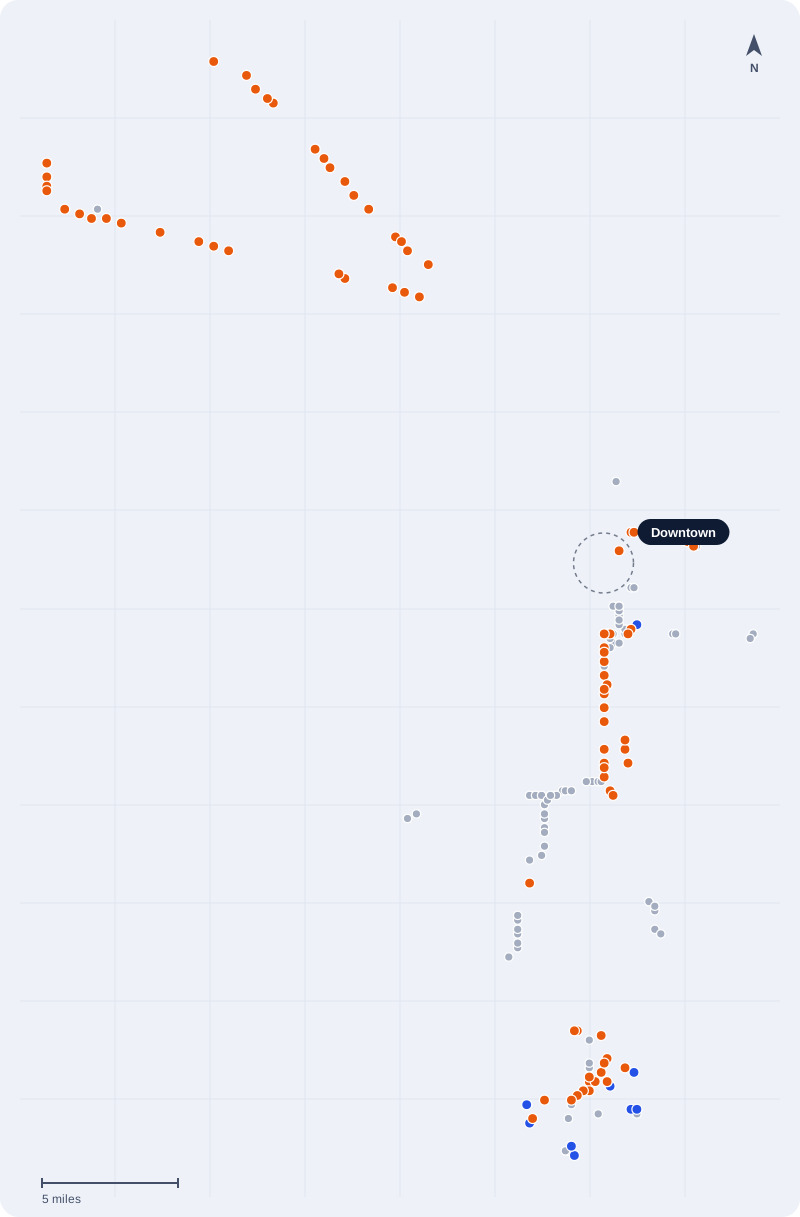
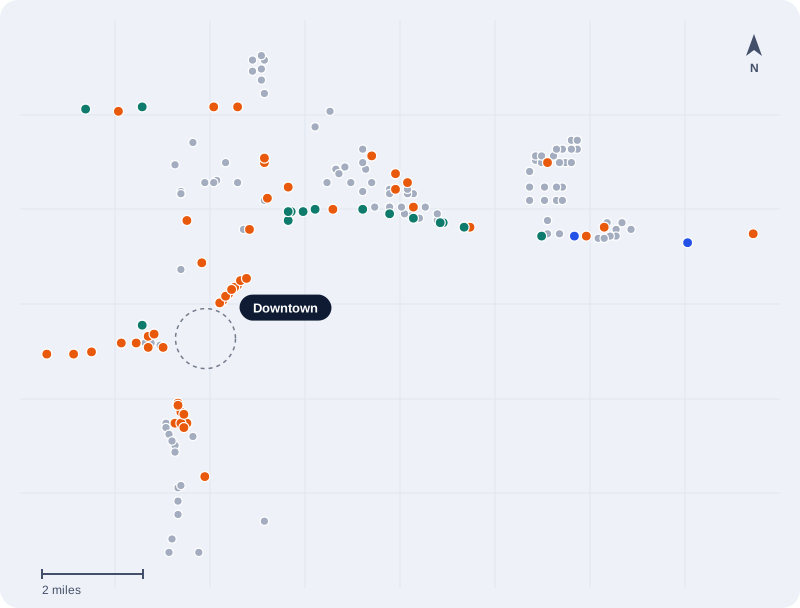
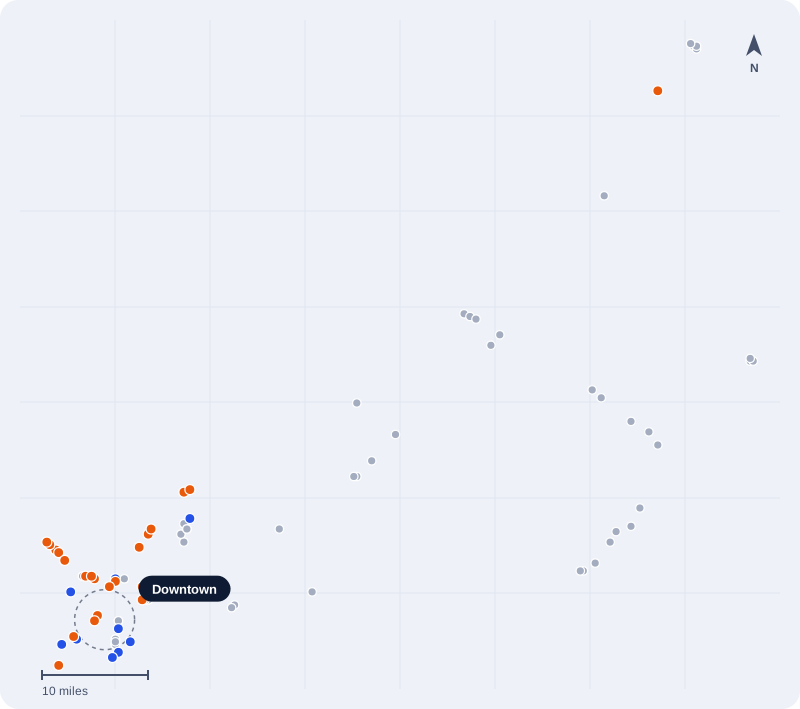
Explore annual average daily traffic on reported road segments, mapped rail lines and FRA day/night train estimates. Counts have different locations and reporting years; they are not live traffic or measured indoor noise.
Understand road traffic counts →Optional layers show mapped industrial, waste-handling and EPA air-program facilities. A facility's presence does not establish exposure, odor or a violation at the home.
See sources and coverage →New York City layers include reported noise complaints, selected public construction projects and reported incidents. These municipal layers do not cover other cities and do not provide a neighborhood safety score.
Check local record limitations →Check noise sources by address · Compare shortlisted homes · Train activity by city · All homebuyer guides
A line that looks quiet at noon can have meaningful overnight freight activity.
Routine horn use is tied to public grade crossings and quiet-zone rules, not simply track distance.
We translate federal crossing records into the questions a home buyer actually asks.
Home Surroundings Check brings together reported road traffic, mapped rail lines, Federal Railroad Administration crossing records and optional nearby context. It helps buyers identify questions worth investigating before an offer or inspection.
Review FRA estimates for daytime and nighttime thru-train movements at nearby reported crossings. The figures are historical estimates, not a live train schedule.
See whether the nearest reported crossing has a federal quiet-zone designation. Quiet zones restrict routine horn sounding but do not guarantee silence.
Compare straight-line distance to the nearest reported grade crossing, available train-speed fields, and recent six-year crossing incidents.
Enter the address and confirm the pin. The Sound tab loads nearby road segments with reported annual average daily vehicle counts. Select a colored road for its count and year, then read how to interpret the result.
The report identifies reported activity and selected nearby sources; it does not measure indoor sound. Use the address noise-source checklist to plan visits and questions.
Municipal report layers currently support New York City only. NYC noise complaints are reported conditions, not measured noise or a quietness rating.
Enter a complete U.S. property or listing address. The tool locates the property with the U.S. Census Geocoder and checks nearby FRA grade-crossing records for reported train movements and other available fields.
Yes. Load surrounding data to estimate distance to the nearest mapped rail centerline. Crossing distance is reported separately. Both use an approximate geocoded property point and are not survey measurements.
A federal quiet-zone designation restricts routine locomotive horn sounding at covered public crossings. Horns may still sound in emergencies and other permitted circumstances, so a quiet zone is not a guarantee of silence.
No. Train counts are FRA-reported estimates, and the report displays the train-count year when available. Rail operations can change after the reported year.
No. Actual conditions depend on terrain, buildings, windows, train operations, horns, switching, and other local factors. Visit the property at different times and ask nearby residents before making a decision.