Trains near a Springfield home: what the records show
The FRA inventory lists 93 public at-grade crossings in or near Springfield. 19 report trains between 6 PM and 6 AM, and 2 sit in a quiet zone. On railroad-company lines, a typical active crossing reports about 2 trains a day; the busiest reports 20.
FRA data retrieved November 9, 2026 · latest record update 2026-10-14
Illustrative AI-generated landscape · not a photo of the searched property
- Night trains19 crossings · 73% of activeCOMMON
- Quiet zones2 crossings · 2%PATCHY
- Top timetable speed60 mph
- Count freshness19 of 26 counted 2021+RECENT
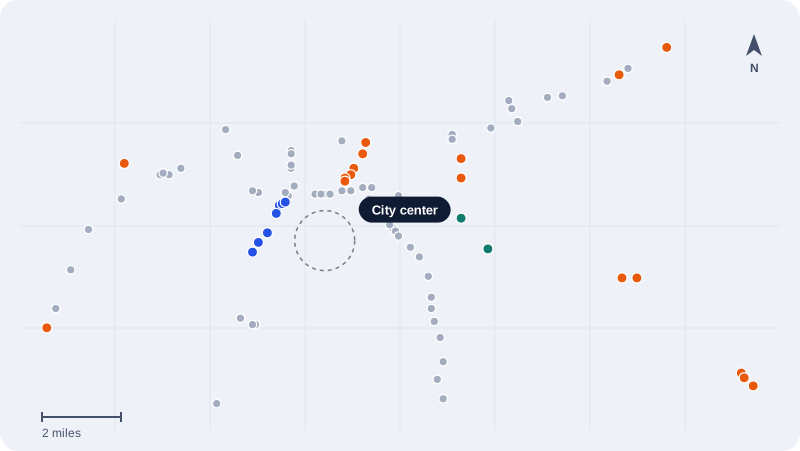
Where Springfield's crossings are
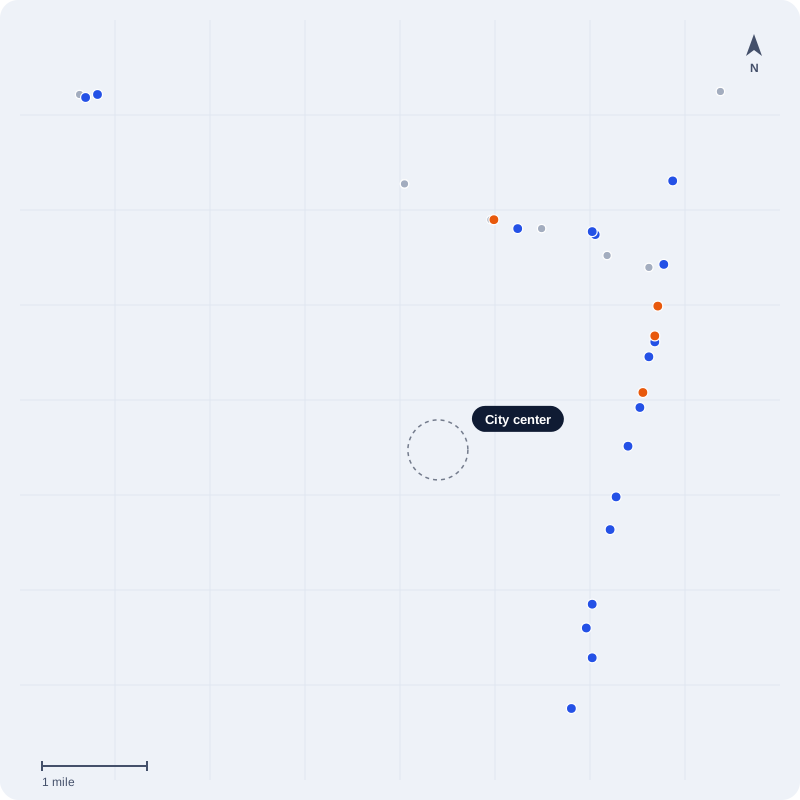
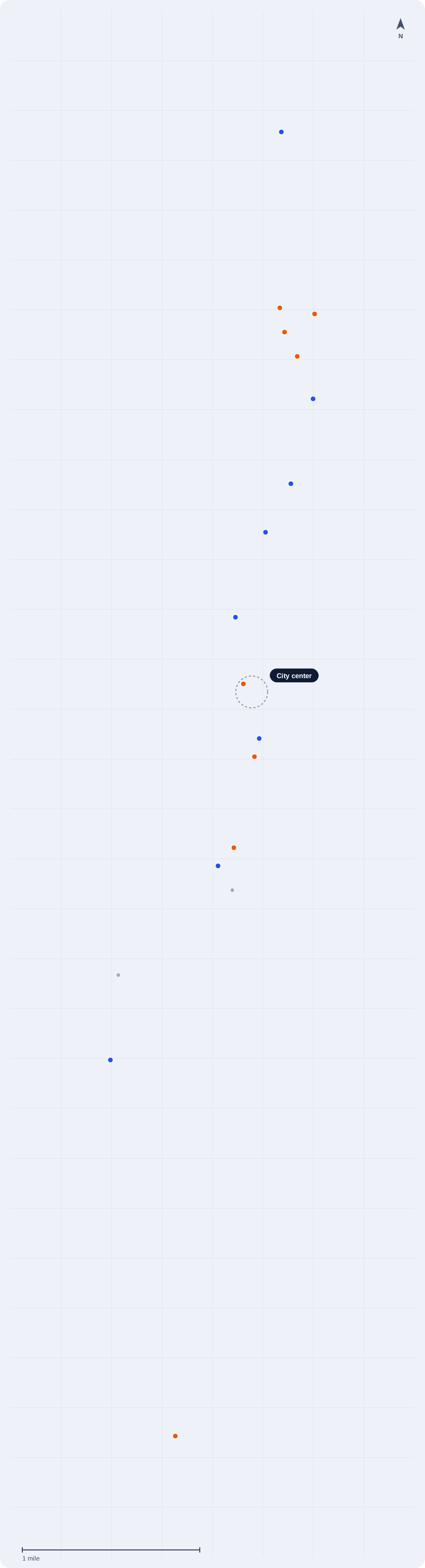
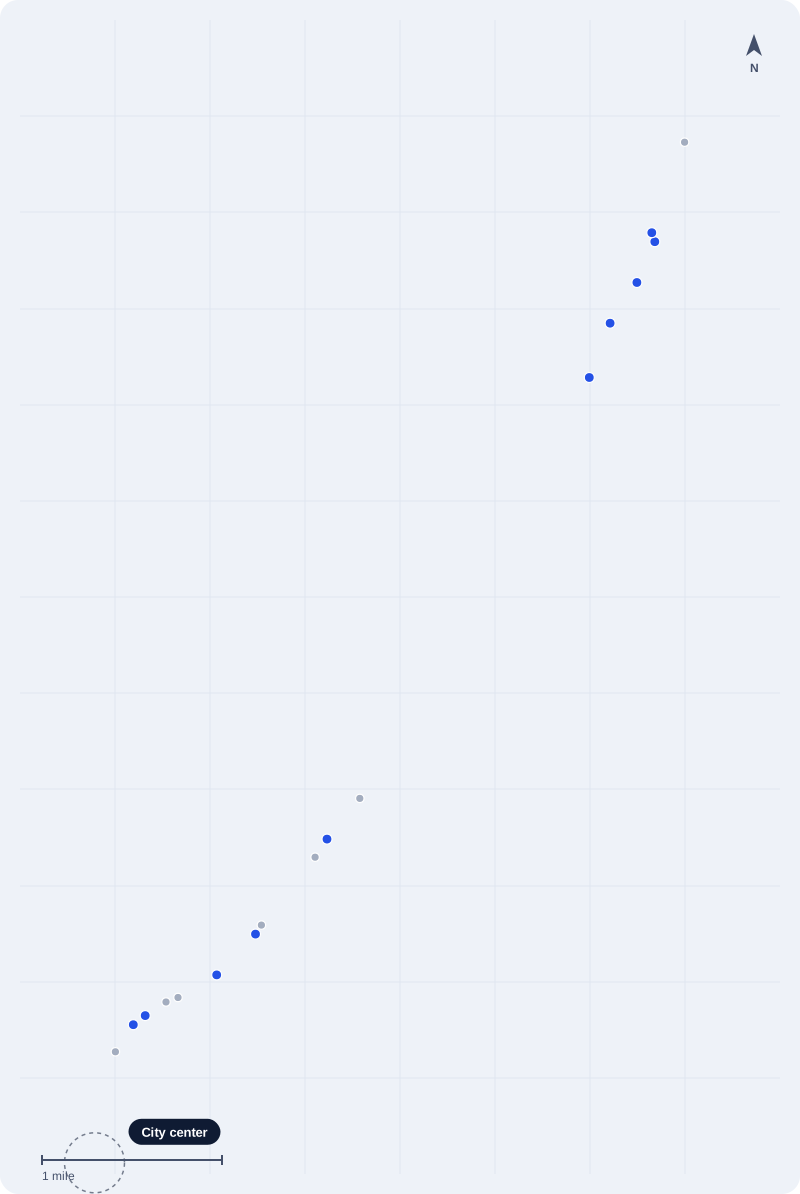
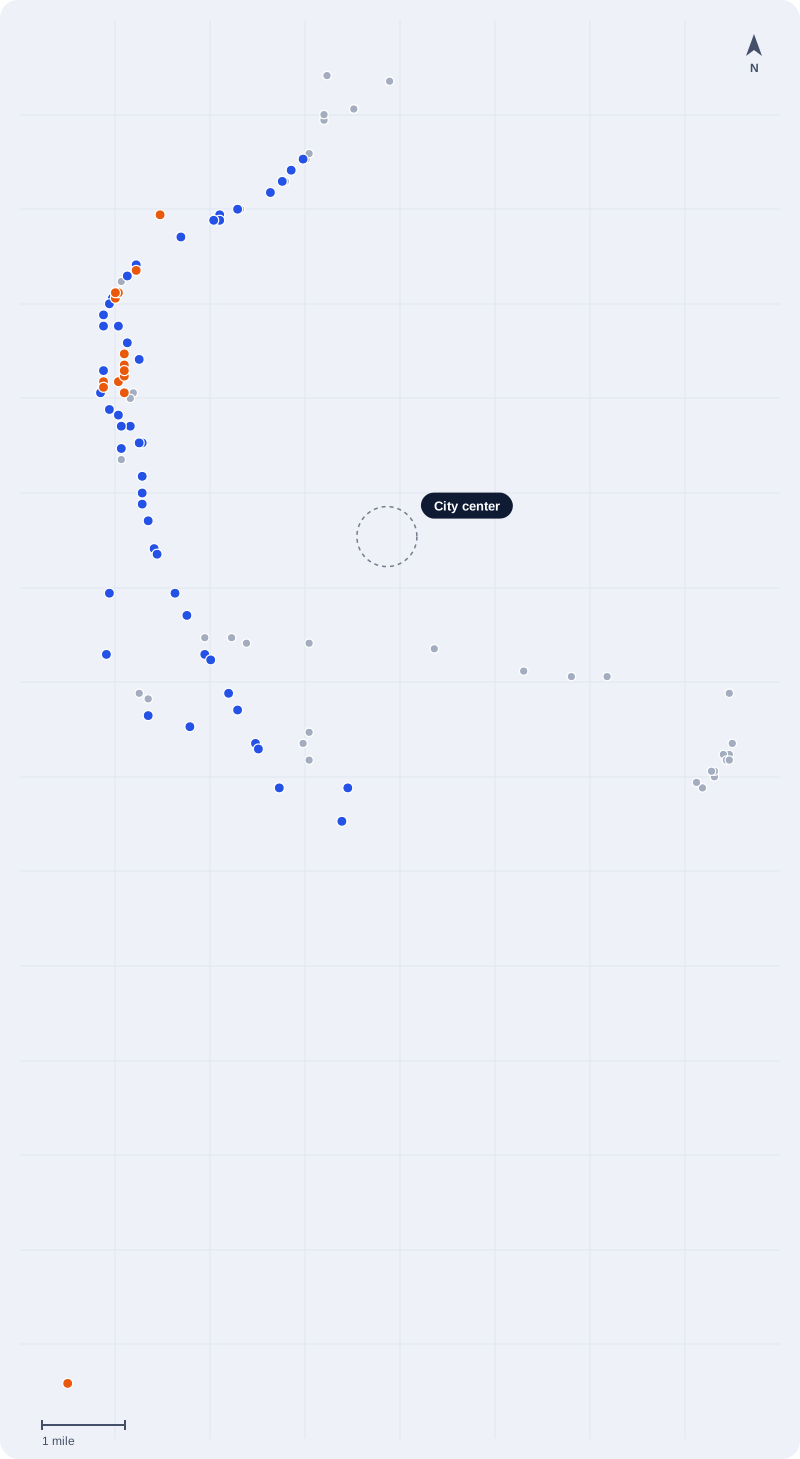
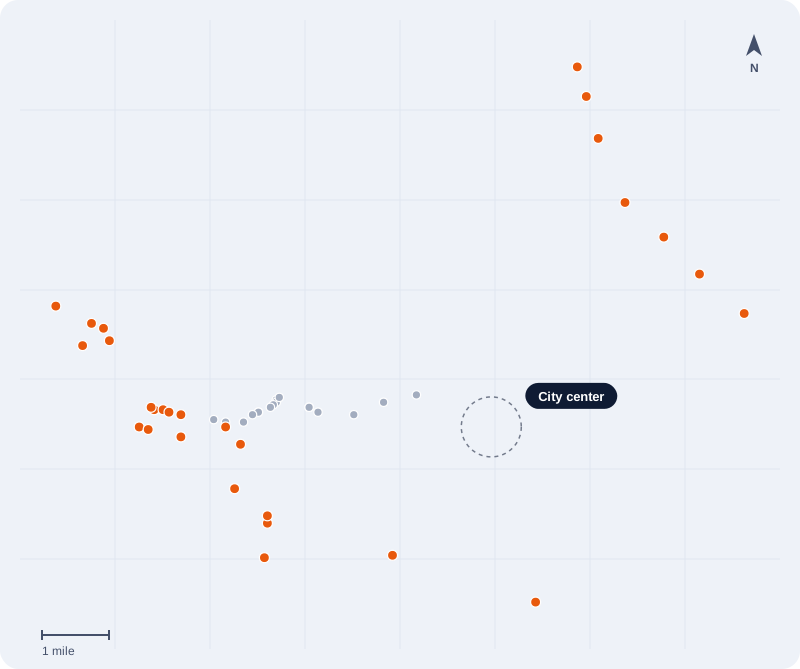
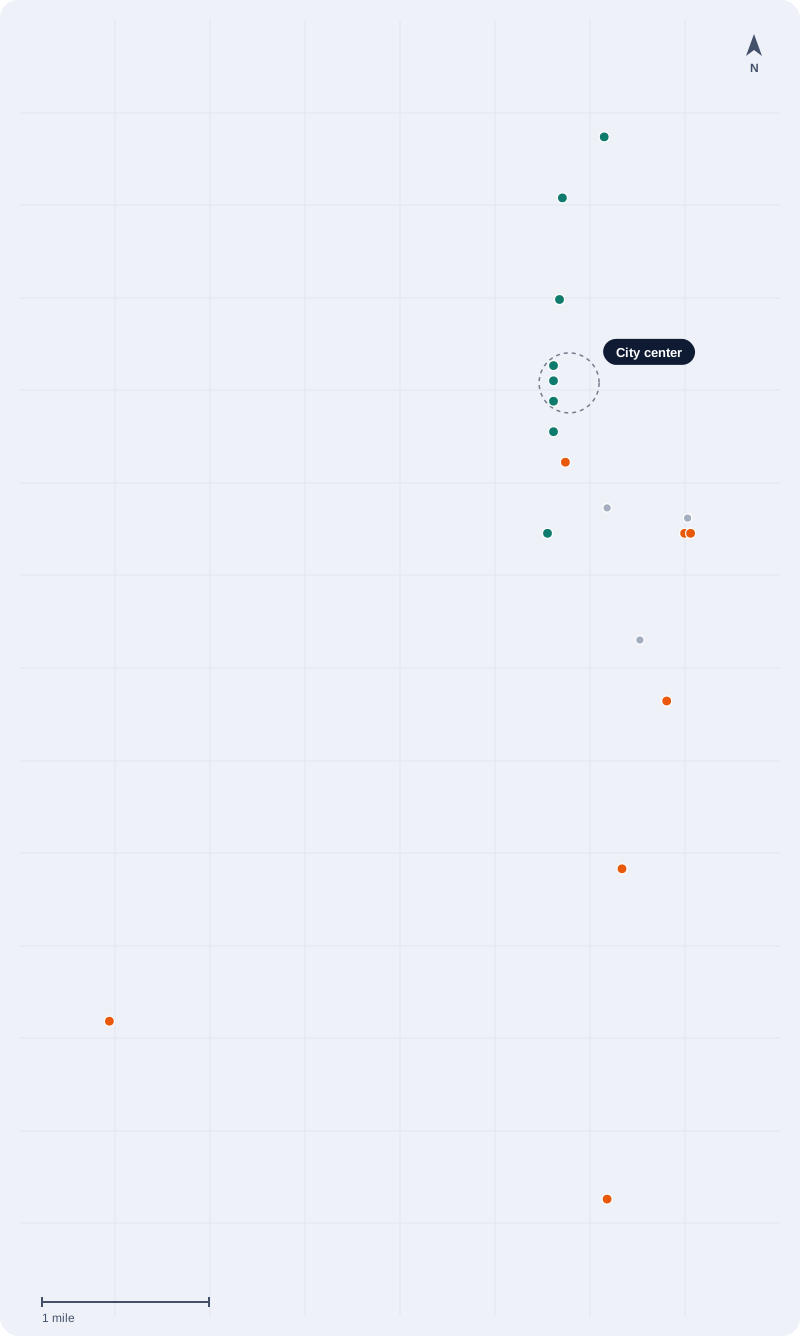
Each dot is one public at-grade crossing in the FRA inventory, colored by what its record reports.
Legend
- Night trains, no quiet zone17
- In a quiet zone2
- Daytime trains only7
- No reported daily traffic67
Night trains concentrate on fewer lines. 17 crossings report night trains outside a quiet zone; find out whether the line near your home is one of them.
Quiet zones are scattered. Only 2 crossings (2%) restrict routine horns — check the one nearest the home.
Gray is not silence. It means no daily count was reported, not zero trains.
Busiest railroad crossings in Springfield
Reported through trains per day (day 6 AM–6 PM, night 6 PM–6 AM). Excludes transit-agency crossings; commuter or passenger trains may still share these tracks. One train passes several crossings — don't add rows together.
What this means for a home search in Springfield
Confirm the crossing, not the neighborhood. Quiet-zone status is reported crossing by crossing (2 of 93 here). Engineers can still sound horns for emergencies, and a home can sit between a quiet-zone crossing and one that is not. How quiet zones work.
Crossing incidents. FRA accident reports list 3 highway-rail incidents at 2 of these crossings between January 2021 and August 2026. That is a safety record for vehicles and pedestrians, not a noise measure. How to read crossing accident history.
Railroads with public crossings
- BNSF 83
- Missouri & Northern Arkansas Railroad 10
Transportation noise in Springfield
How many residents live where roads, rail or aircraft produce a modeled 24-hour average of 55 dB or more outdoors, the level EPA's 1974 noise guidance used for residential areas.
- All transportation0%of residents at 55 dB+
- Roads0%of residents at 55 dB+
- Rail0%of residents at 55 dB+
- Aircraft0%of residents at 55 dB+
21% of residents live where transportation noise averages 45 dB or more, 0% at 55 dB or more and 0% at 60 dB or more, less than the typical city. That ranks 271st of the 299 cities we cover (median 3%). Method: each of the city's 155 census block groups is placed at its 2020 population center and given the level the USDOT National Transportation Noise Map (2020 traffic, ~30 m grid) shows there. It is a simplified national model of average sound, not a measurement; train horns and flyovers are far louder than the average. Check one address for the level at that home.
Weather and natural hazards in Springfield
Summer days average 87°F with nights around 66°F; winter averages 46°F by day and 25°F at night. NOAA 1991–2020 climate normals at Springfield Wbo, 0.9 km from the city center.
- Days at 90°F or hotter38a year
- Days at 100°F or hotter2a year
- Nights below freezing89a year
FEMA National Risk Index: Greene County
How expected losses from each hazard compare with other U.S. counties; ratings rise with population and property value as well as weather. Rated higher than most: winter storms, ice storms, heat wave, tornadoes. Check the census tract for a specific address in the report.
- Winter storms Very High
- Ice storms Very High
- Heat wave High
- Tornadoes High
- Cold wave Moderate
- River flooding Moderate
- Wildfire Low
- Hurricanes Very Low
Before you make an offer
Find the nearest crossing
Horns sound at crossings, so distance to the crossing matters more than distance to the track.
Read its night count
Note night trains, quiet-zone status and count year for that crossing ID.
Visit after 10 PM
Listen outside, then inside with windows closed. Feel for vibration.
Ask the neighbors
Has traffic changed since the count year? Counts are estimates, not schedules.
More detail: how many trains pass near my house, freight train noise at night and the vibration checklist.
The map shows the city. Your address shows your nights.
Nearest crossing, day and night trains, quiet zone, speed and incident history for one property.
Common questions about trains in Springfield
Do trains run at night in Springfield?
19 of 26 crossings with reported traffic list trains between 6 PM and 6 AM. Check the specific crossing near a home, because night traffic varies by line.
Are there railroad quiet zones in Springfield?
2 public crossings are reported in an FRA quiet zone. Status is reported per crossing, so confirm the crossing nearest the address.
Which railroads operate in Springfield?
By number of public crossings: BNSF (83), Missouri & Northern Arkansas Railroad (10).
How fast do trains go through Springfield?
The highest maximum timetable speed reported at these crossings is 60 mph. Many urban crossings report much lower limits; the busiest-crossing list shows the speed for each.
Is Springfield a noisy place to live?
About 0% of Springfield residents live where modeled transportation noise averages 55 dB or more over 24 hours (USDOT 2020 noise map), less than the median city among the 299 we cover. Noise varies block by block, so check the specific address.
How hot does it get in Springfield?
Springfield averages about 38 days a year at 90°F or hotter and 2 at 100°F or hotter, with summer highs near 87°F (NOAA 1991–2020 normals).
Does it freeze or snow in Springfield?
About 89 nights a year drop below freezing. Winter nights average 25°F.
Sources and limits
Crossing counts come from the FRA Crossing Inventory (Form 71, current), filtered to open, public, at-grade crossings whose inventory city is Springfield (records reported as in or near the city). Incident counts come from FRA highway-rail accident reports (Form 57), January 2021–August 2026. Train counts are railroad-reported estimates with the listed count year; they are not live schedules, noise levels or safety ratings. Read our source coverage and limitations and corrections policy.